Old Town · Harbour · Splantzia
Inside the old walls
Chania’s beauty is real, but it is most interesting before it becomes scenery. Walk early through Splantzia as shutters open and delivery carts take the lanes. Cross towards the harbour through streets where Venetian stone, Ottoman timber and post-war life sit against one another without a tidy chronology.
The harbour deserves the full curve, from the Firkas walls to the arsenals and out along the breakwater. Then leave it. The quieter pleasure is often one street back: a workshop, a bakery, a shaded table without a water view.
Nea Chora · Halepa · Koum Kapi
The city beyond the postcard
West of the walls, Nea Chora keeps a working fishing harbour and an easy town beach. Go before breakfast for a swim or towards lunch to see what the boats have brought. East, Koum Kapi is a local evening promenade, while Halepa holds Chania’s diplomatic and aristocratic history in neoclassical houses above a rougher shoreline.
These are not detours from Chania. They are how the city becomes more than its most photographed kilometre.
Akrotiri · Monasteries · Coves
The peninsula close at hand
Akrotiri rises immediately north-east of the city. Its roads connect clear coves, austere monastic architecture and open ground scented by thyme. It works well when you want a half-day rather than an expedition: a morning swim, a monastery approached respectfully, then lunch before the road returns to Chania.
Airport and military infrastructure also occupy the peninsula. The appeal lies in the contrast and in choosing a small number of places well, not circling every named beach.
Apokoronas · Springs · Craft
Green villages east
Apokoronas is softer country: springs, cypress, olive, foothills and villages whose stone houses reveal a more domestic architecture. Vamos and Gavalochori are useful anchors, but the road between smaller settlements is part of the experience.
Visit a craftsperson or producer with time to listen. Eat beneath trees. Return through Stylos and orange groves as the light lowers. This is one of the easiest days to make entirely your own.
Falassarna · Balos · Kissamos
The long western light
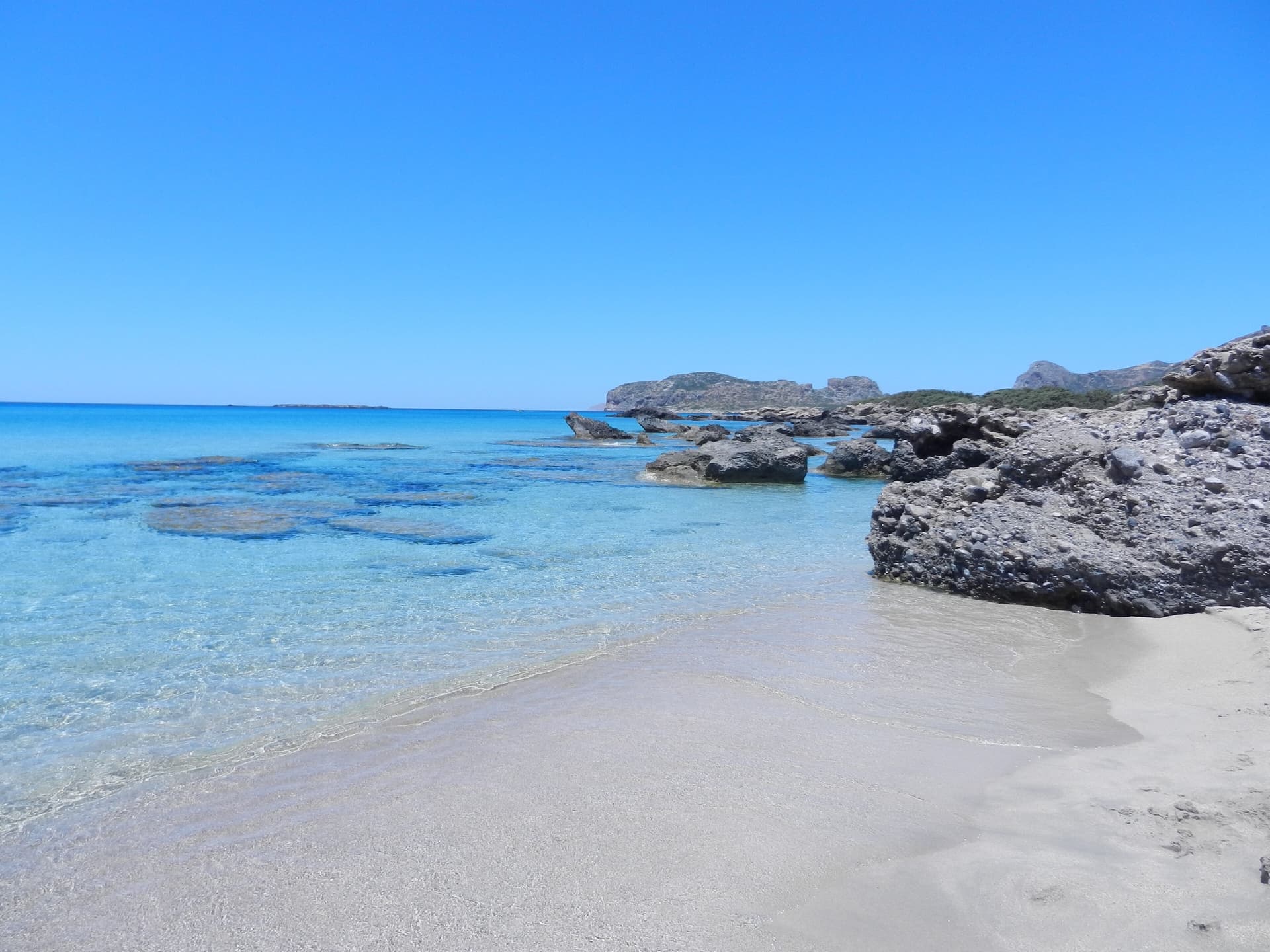
The landscape opens beyond Kissamos. Falassarna faces the weather directly: broad water, large sky and evening light worth waiting for. Balos is more complex—extraordinary geography whose experience depends sharply on boat, hour and season.
Between the coast and Chania lie working olive groves, wineries and inland tables that justify leaving the beach before sunset. We build western days around wind and appetite, not a fixed circuit.
Elafonissi · Villages · South-west coast
A road through the island
Elafonissi is not just a destination at the end of a transfer. The road crosses a gorge, chestnut country and villages that make the island’s interior legible. Leave early, walk beyond the most immediate shallows and reserve time to stop inland on the return.
In July and August, timing matters. Outside peak summer the journey becomes quieter, and the coast can feel completely different beneath spring cloud or autumn light.
Theriso · Omalos · Samaria
The White Mountains
Lefka Ori sit behind Chania like weather made solid. The Theriso gorge gives a gentle first approach from the city. Omalos climbs higher into plateau country. Samaria cuts all the way south in a serious, beautiful crossing that asks for fitness, proper shoes and a long return sequence.
You do not have to cross a famous gorge to understand the mountains. A guided foothill walk, village lunch or drive through changing vegetation can be the more attentive choice.
Wine · Olive oil · Food culture
A cultivated landscape
Western Crete’s food culture begins in cultivation: olives milled quickly after harvest, vines adapted to heat and altitude, sheep and goats moving across land too rough for crops, wild greens gathered with exact local knowledge.
Visit producers who can explain their decisions, not simply pour a tasting. At the table, look for specific cheeses, oil with a harvest date and a kitchen that changes when the garden does. The most memorable Cretan meals are often structurally simple and impossible to reproduce elsewhere.